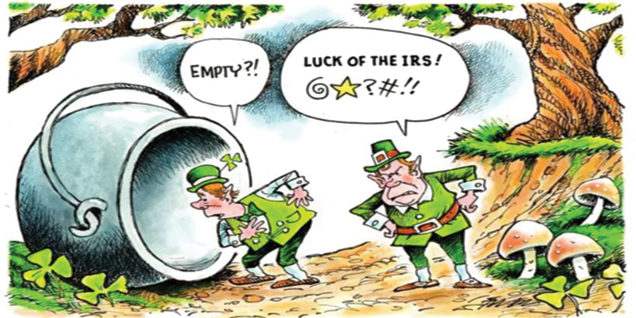
Let’s assume the market had a 40% correction after the conversion (2008, 2001-2003). The investors would now have a portfolio worth $390,000. The investor would have reduced the value of their portfolio by over 60% in one year. After the 2008 market crash, the market took five years and six months to recover. If you were a market index investor, you would not have returned to your original conversion value of $650,000 for over five years.
As you can summarize, the key to the conversion is the strategy employed for your investments.
Let me give you an alternative idea to reduce the downside risk of the conversion.
The investor decides to substitute the asset class investment choice with the stock selection style for selecting investments. The investor then decides to select the top ten stocks each year from the Healthcare sector by market cap. Their downside in 2008 would have been -13.08% and their portfolio would have fully recovered by December 2009. In the time it took for the asset class investor (S&P 500 index) to get back to the original value before the crash, the Healthcare stock selection would have made over 50%.
The original conversion value of $650,000 with the asset class selection style would finally be back to $650,000. The stock selection investor would now have $1,004,584 of tax-free investments.
If you would care to discuss more about these ideas, I am open to visiting with you by phone, in person or by Zoom.
Notes and Disclaimers
This document and the information contained herein are for educational and informational purposes only and do not constitute, and should not be construed as, an offer to sell, or a solicitation of an offer to buy, any securities or related financial instruments. Responses to any inquiry that may involve the rendering of personalized investment advice or effecting or attempting to effect transactions in securities will not be made absent compliance with applicable laws or regulations (including broker dealer, investment adviser or applicable agent or representative registration requirements), or applicable exemptions or exclusions therefrom.
This document, including the information contained herein may not be copied, reproduced, republished, posted, transmitted, distributed, disseminated or disclosed, in whole or in part, to any other person in any way without the prior written consent of Core Capital Management & Research, Inc. (“Core Capital”)
This document contains information and views as of the date indicated and such information and views are subject to change without notice. Core Capital has no duty or obligation to update the information contained herein. Further, Core Capital makes no representation, and it should not be assumed, that past investment performance is an indication of future results. Moreover, wherever there is the potential for profit there is also the possibility of loss.
Certain information contained herein concerning economic trends and performance is based on or derived from information provided by independent third-party sources.Sources in this article include the Federal Reserve, Yahoo Finance, BEA, and NBER. Core Capital believes that such information is accurate and that the sources from which it has been obtained are reliable; however, it cannot guarantee the accuracy of such information and has not independently verified the accuracy or completeness of such information or the assumptions on which such information is based. Moreover, independent third-party sources cited in these materials are not making any representations or warranties regarding any information attributed to them and shall have no liability in connection with the use of such information in these materials.